
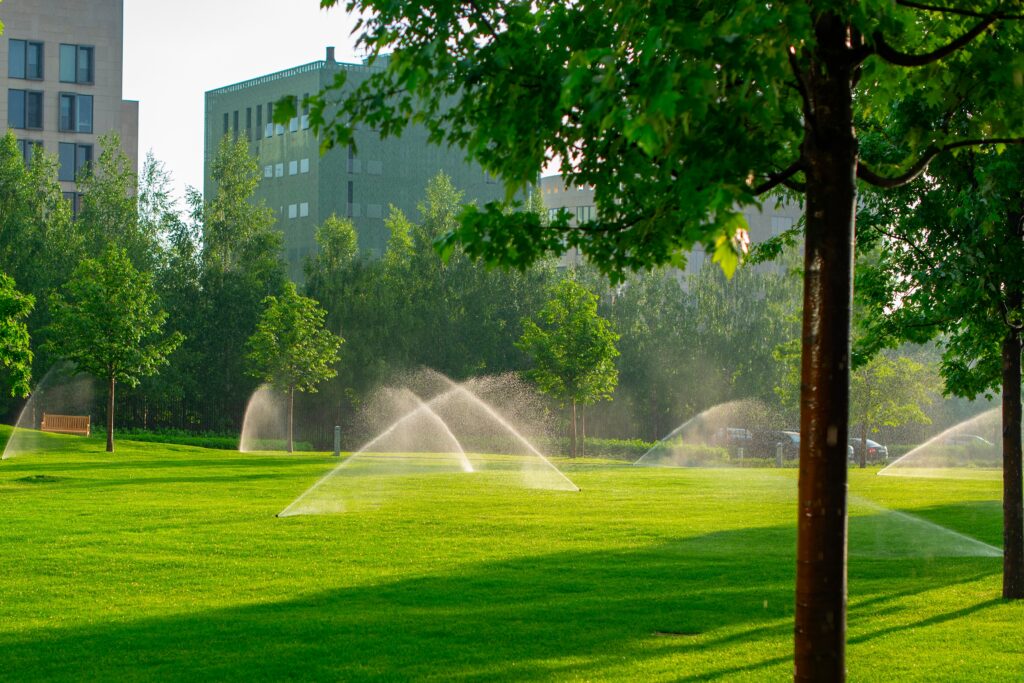
Irrigation That Waters Smarter, Not Harder
As a Hunter-certified installer, West Property Services designs and builds high-efficiency irrigation systems that keep your landscape lush while putting every drop of water to work—no waste, no runoff, no guesswork.
Efficiency Matters
Water Only Where It’s Needed, Exactly When It’s Needed
A great irrigation system does two things at once: it keeps your lawn, beds, and plantings healthy, and it does so without wasting a single gallon more than necessary. Too many systems overwater — running on outdated timers, spraying sidewalks instead of soil, and driving up your water bill while doing your landscape no favors.
We do it differently. West Property Services designs each system around your specific property, accounting for its layout, soil, sun exposure, and plant needs, so water goes exactly where it should and nowhere it shouldn’t. The result is a healthier landscape, lower water usage, and a system that practically manages itself.”
Expert Installation
Hunter-Certified Installation
We install with Hunter, one of the most trusted names in the irrigation industry. As a Hunter-certified installer, our team is trained on their full lineup of professional-grade equipment and best practices, which means your system is designed and built to the standards of a company known worldwide for efficient, reliable irrigation.
Hunter builds their products around a simple principle we share: use only the water and energy the job actually requires. From precision nozzles to smart, weather-aware controllers, their technology is engineered to cut waste, and our certification means we know how to get the most out of every component.
Smart, weather-aware controllers
Wi-Fi-enabled controllers like Hunter’s Hydrawise adjust watering automatically based on local weather, so your system skips a cycle when it rains and dials back when it’s cool, sparing you from watering in a downpour.
Rain and weather sensors
Sensors pause or adjust watering in response to real conditions, preventing the classic waste of sprinklers running during a storm.
High-efficiency nozzles
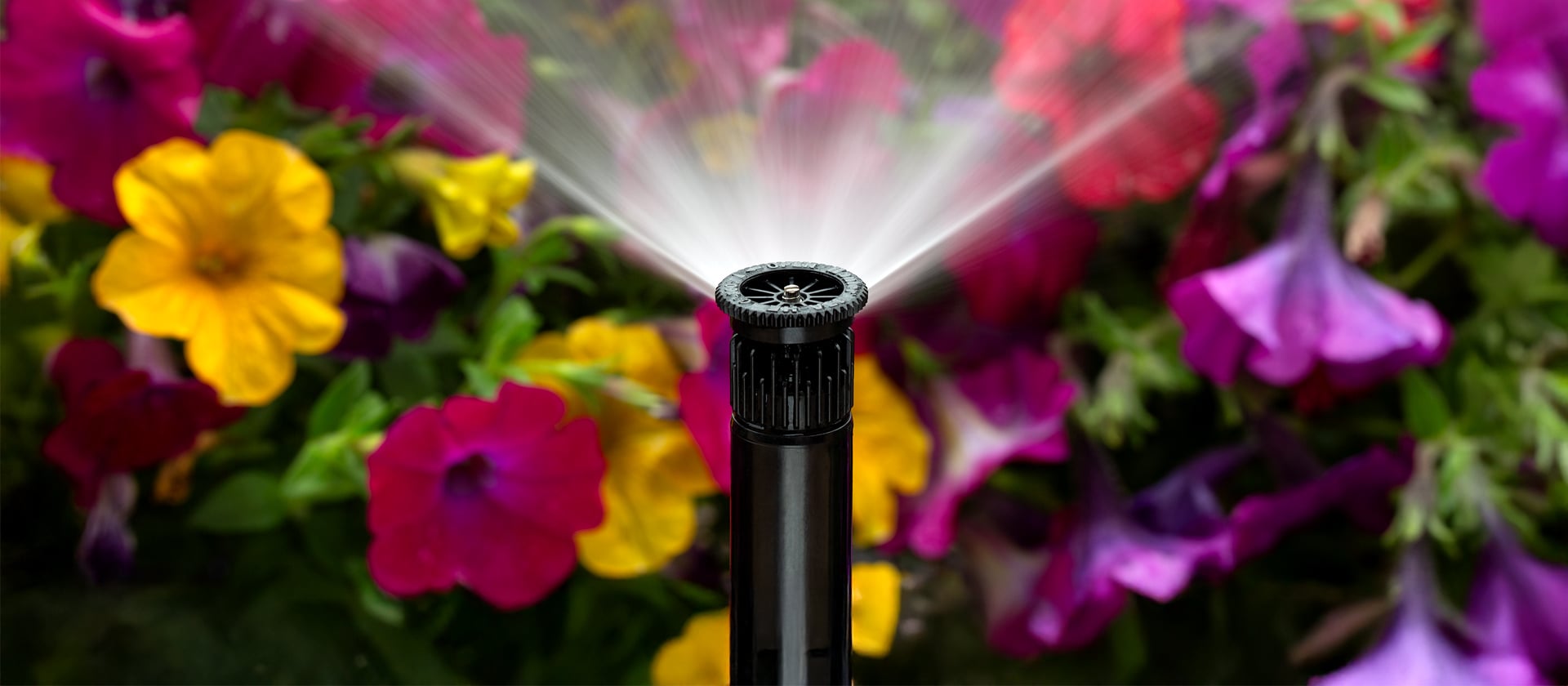
Precision nozzles like the Hunter MP Rotator deliver water slowly and evenly, so it soaks in rather than running off onto pavement or pooling in low spots.
Pressure regulation
Keeping pressure in the ideal range reduces misting and drift, meaning more water reaches the soil instead of blowing away.
Zoned, custom design
We divide your property into zones so the lawn, garden beds, and shaded areas each get the right amount of water, rather than a one-size-fits-all setting.
Drip and micro-irrigation
Where it makes sense, we use drip lines to deliver water directly to plant roots, one of the most efficient methods available.
Services
Why Choose West Property Services?
Hunter-certified Expertise
Trained on the best equipment in the business.

Efficiency-first Design
Systems built to conserve water and lower your costs.

1-year Workmanship Warranty
We stand behind every installation.
Frequently Asked Irrigation Questions
The cost of an irrigation system depends mainly on the size of your property, the number of watering zones, and the equipment you choose. A larger yard, or a system with smart controllers and high-efficiency heads, will cost more than a small, basic setup. Because every property is different, we provide a free, no-obligation quote based on your specific yard so you know the price up front.
A poorly designed system can waste water, but a well-designed, efficient system actually reduces it. Smart, weather-based controllers and high-efficiency nozzles water only when and where it’s needed, skipping cycles when it rains and minimizing runoff. That means a healthier landscape and a lower water bill than manual watering or an outdated timer system.
In mid-Michigan, most sprinkler systems are started up in spring, once the ground has fully thawed and the risk of a hard freeze has passed, typically in April. Turning a system on too early risks freeze damage, so we recommend a professional spring start-up that includes a full inspection to catch any winter damage before the season begins.
You should winterize your irrigation system in the fall, before the first hard freeze, which in Michigan usually means by mid-to-late October. Winterization uses compressed air to blow water out of the lines so it can’t freeze, expand, and crack your pipes or components over winter. Skipping this step is one of the most common causes of expensive spring repairs.
As a general rule, most Michigan lawns need about 1 to 1.5 inches of water per week, including rainfall. It’s better to water deeply and less often, ideally in the early morning, which encourages deep, healthy roots and reduces evaporation. A smart controller handles this automatically by adjusting run times to the weather, so you’re never guessing.
A Hunter-certified installer is trained on Hunter’s professional-grade irrigation equipment and installation best practices. Hunter is one of the most trusted names in the irrigation industry, and the certification means your system is designed and installed to their proven standards for efficiency and reliability. For you, that translates to better coverage, fewer problems, and less wasted water.
For most properties, yes. Smart controllers automatically adjust watering based on local weather and conditions, so your system isn’t running in the rain or overwatering when it’s cool. Compared to a basic fixed-timer system, that usually means a healthier landscape and noticeable savings on your monthly water bill.
Yes. We repair all the common issues, including leaks, broken heads, valve problems, and uneven coverage, and we can upgrade older systems with smart controllers and high-efficiency nozzles to bring them up to modern, water-saving standards. In most cases you don’t need to replace an entire system to make it run better and use less water.
Ready for an Irrigation System That Pays You Back?
Reach out today for a free consultation, and we’ll walk your property, talk through your goals, and build a plan that fits.